Pertinent Perils, a blog by Donna Childs, building a community of resilient small businesses


Archive for the ‘Hurricanes’ Category

Sep22010

Next in the Alphabet: Earl, Fiona, Gaston

Volatile Earl

Volatile Earl

Next in the queue: Earl, Fiona, Gaston, with Hurricane Earl now upgraded to a Category 4 storm and approaching the East Coast by late today. According to the National Hurricane Center, “Only a small western deviation of the track to the west would bring the core of the hurricane to the coast.” In preparation for this contingency, mandatory evacuation orders have been ordered for North Carolina’s Outer Banks and Cape Hatteras. Earl is a particularly volatile storm, having been downgraded to Category 3 earlier yesterday, but then revised to Category 4 by the end of the day. Earl’s maximum sustained winds have reached 135 miles per hour and may continue to accelerate. North Carolina is bracing for the possibilities of breaking waves up to 15 feet in height, four-foot storm surges and tornadoes. As the storm continues to move up the Atlantic coast, the long duration of its force winds threaten widespread power outages. By Friday, Earl should be pummeling the Mid-Atlantic States with heavy rains and winds before continuing its projected course over Newfoundland. At the present time, a hurricane watch now extends as far north as Nantucket and Martha’s Vineyard in Massachusetts. The severe weather over the holiday weekend will likely cause revenue losses for businesses in the tourism industry, as the last weekend of summer typically attracts beachgoers. But mitigate the losses by making sure you are prepared. I am doing my grocery shopping and errands in anticipation of working at home tomorrow.

Aug242010

Hurricane Danielle

Hurricane Danielle

Hurricane Danielle

The National Hurricane Center has upgraded Danielle to hurricane status, but its present course suggests it is unlikely to strike the East Coast. The 2010 hurricane season is particularly stressful, as it represents the fifth anniversary of Katrina, bringing back painful memories for those affected. It is forecast to be especially severe, it coincides with another disaster in the Gulf Coast and this is a time when financial resources are strained.

One of the programs developed by Texas emergency authorities, in drawing on the lessons of Katrina, was to consider in some detail the evacuation needs of disadvantaged people. There may be those with cars who lack money for gasoline to make a long evacuation trip. The state arranged for people who need rides to register in advance so that no one would be left behind. We will all breathe a sigh of relief when the peak hurricane season is behind us. Meanwhile, we need to apply innovative thinking such as this example in Texas to plan for extreme demands on limited resources.

Jul222010

Tropical Storm Bonnie On the Wrong Course

In Harm's Way

In Harm's Way

Tropical Storm Three is now officially Tropical Storm Bonnie; let’s hope it doesn’t escalate to “Hurricane Bonnie”. Based on the projected path of the storm, certain of the work on the relief well has been stopped as workers have been directed to leave the area. The forecast is for an above-average storm season in 2010; this is the year that we pray the forecasters get it wrong.

What can we do to help small businesses in the Gulf Coast at this difficult time? We can support their businesses. I am making a point to take my vacation this year in the Gulf Coast region and am trying to organize whatever procurement I have to do with businesses in those states.

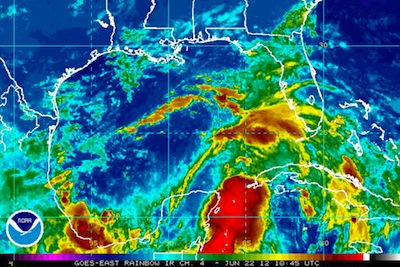
This graphic is courtesy of the National Oceanic and Atmospheric Administration. NOAA updates its forecasts frequently; this update is as of the close of business today.

Jun232010

Morale in the Gulf Coast

NOAA

Source: NOAA

Residents of Louisiana must be on pins and needles as their fate is decided. A judge overturned the moratorium on offshore drilling imposed by the federal government, which government action caused additional hardship for the state, as it depends on the jobs and taxes generated by the oil industry. And the rest of the country would share the pain, as recent research by the energy analysts of Goldman Sachs found that a ban on offshore drilling would reduce expected oil production by one-half by 2015. As long as we depend on fossil fuels to meet our energy needs, a complete ban appears shortsighted. Even worse, according to the State Department, the administration declined offers put forward by 30 countries and international organizations to assist in containing and cleaning the oil spill.

The White House indicated that it plans to appeal the ruling. A news report that the judge who overturned the moratorium may have undisclosed financial ties to the oil industry likely strengthens the government’s position. And just when you think that the news cannot be worse for the Gulf Coast, the National Oceanic and Atmospheric Administration reports a 30% likelihood that a tropical wave coming from Haiti may develop into a serious cyclone. A hurricane would only worsen the environmental crisis, as high winds and storm swells could spread the contaminants.

But for the fishing and tourism industries, the storm has already hit. CNN reports that P&J Oyster Company, a business in the heart of New Orleans’ French Quarter that has been operating for 134 years, was forced to close. A study published by Texas A&M University Press reports that the four largest industries in the Gulf of Mexico, accounting for $230 billion in economic activity annually, are oil, tourism, fishing and shipping. It may be years, according to the report, if not decades, before these industries fully recover. No wonder USA Today reports of the importance of keeping up morale in the region; recovery will be a long and tough process.

Jun92010

Complacency and Maybe Disaster Fatigue?

It's That Time of Year

It's That Time of Year

As disasters recede into memory, complacency creeps in and we become less vigilant in preparing for the storm season. Even worse, mega-disasters competing for our attention may distract us from more imminent threats. With the round-the-clock media attention on the largest oil spill in U.S. history, residents of the Gulf Coast may be desensitized to the beginning of the 2010 hurricane season. This would be risky at any time, but particularly when the forecast calls for an unusually severe Atlantic storm season. This indifference alarms the Florida Division of Emergency Management, which retained Florida State University geography professor Jay Baker to conduct a study of disaster preparedness. Professor Baker found that nearly two-thirds of residents of hurricane evacuation zones dismissed the threat levels of wind and water damage. Half of the residents of the hurricane risk zone do not have an evacuation plan, an increase from prior years. It was just a few short years ago, in the 2004 – 2005 period, that Florida endured a destructive hurricane season in which it was slammed by storm after storm; in particular, Hurricanes Katrina and Wilma. But it isn’t just Floridians who dismiss the threat of the 2010 storm season. A Maxon-Dixon multi-state poll of residents in the southeastern coastal states found that most residents are unaware of their vulnerability. I am particularly concerned about a potentially severe storm season during a period of record unemployment. Imagine that you live in one of the vulnerable states. You would reasonably have to budget at least $1,000 for an evacuation fund, inclusive of transportation, meal and hotel costs, perhaps slightly less if you have out-of-area friends and relatives with whom you could stay. How many people who are collecting or have exhausted their unemployment benefits are equipped to evacuate? If you live in the hurricane zone, look after your employees and their families by briefing them on appropriate safety precautions during the storm season, including an evacuation plan.

Jun42010

When 1+1=5: the Oil Slick During Hurricane Season

New Orleans Mayor Mitch Landrieu expressed concern about how the Deepwater oil spill could be lifted by hurricane force winds and storm surges to become a tidal surge of slime over inland areas. “The oil that’s in the water is either going to be on the marshland or the land that it touches, the challenges are great,” he said. Ron Kendall, an environmental professor at Texas Tech University, told National Geographic that a major hurricane could deliver oil to downtown New Orleans. My friends in Louisiana told me that they see oil slicks the size of Manhattan moving through the Gulf Coast, creating dead zones where fish and the birds that feed on them cannot survive. Should the residue from the spill be pushed deep into coastal marshes, which slow and sometimes block storm surges, low-lying areas such as New Orleans will be even more vulnerable to major storms for the foreseeable future.

May202010

Storm Surge Impact a Major Concern This Summer

Calm Before the Storm

Calm Before the Storm

First Spatial, a mapping technology company, has issued a report analyzing the impacts of hurricane storm surges on U.S. cities on the Atlantic and Gulf coasts. Storm surges are walls of water created under hurricanes when high winds push the water to the edge of the storm. The surge wall rises higher as the ocean floor becomes shallower as the storm approaches the coastline. According to this report, New Orleans and Miami are most vulnerable to a Category-1 hurricane. The researchers evaluated residential valuation data against a storm surge model to determine potential losses under different scenarios. They found, for example, that a Category-4 hurricane would cause $11 billion in damages to Long Island. Of course, if commercial properties were included in the analysis, the impacts would be much greater. What the report does not measure are the human losses; according to the National Oceanic and Atmospheric Administration, flooding induced by storm surges has killed more people in the U.S. than any other consequence of hurricanes, such as high winds or fresh-water flooding. For this reason, the NOAA is working to improve its forecasts of storm surge warnings. Given that AccuWeather forecasts an “extreme” hurricane season for 2010, these advisories are critical.

May182010

Improving Power Recoveries After Major Storms

Researchers have developed a computer model that may predict power failures prior to major storms, which insight may allow for better facilities planning for the benefit of consumers. Geography professors Seth Guikema of Johns Hopkins University and Steven Quiring of Texas A&M University examined data from five hurricanes that caused power losses, some for more than ten days: Dennis (1995), Danny (1997), Georges (1998), Ivan (2004) and Katrina (2005). They considered the locations of the power failures, the configurations of the power systems and the specific characteristics of the individual hurricanes, such as wind speeds. They believe that the data they have collected result in a model to improve the accuracy of predicted power failures, allowing utility companies to better utilize resources in advance of a storm with crews assigned to the areas likely to be affected. More accurate forecasts can reduce the millions of dollars utility companies pay in power restoration to the benefit of the hundreds of thousands of affected residents and businesses. With hurricane season just around the corner, small businesses located in the Atlantic and Gulf Coast states should ask their utility providers for specific details of their contingency plans for major storms. Make sure that your electricity and gas providers are aware of this research, it could make a difference to your business.

Apr222010

Louisiana Prepared

Gulf Seafood - the Best!

Gulf Seafood - the Best!

I am in Baton Rouge today, working with a team representing each of the nine Small Business Development Centers to develop the disaster preparedness training in advance of the 2010 hurricane season. Forecasters expect that beginning June 1, we will see an above-average storm season, with a greater than average number of storms making landfall in the U.S., with those storms representing greater severity than historical averages. This year’s hurricane season particularly worries me because our states are facing $90 billion budget shortfalls. They simply don’t have the resources to fund a significant disaster relief effort. This was recently demonstrated to painful effect in Rhode Island. Sadly, the state with the second highest unemployment rate experienced its worst flooding in more than two centuries. This makes our preparedness efforts assume greater urgency, as with fewer resources to cushion our losses; we must redouble our efforts to mitigate the risks. On a happier note, this photograph shows one of my favorite seafood restaurants in Louisiana to which I am about to return! I can always count on being well fed when I am here.

Apr152010

Nevis Still Reeling From 2008 Hurricane

Before the Storm

Before the Storm

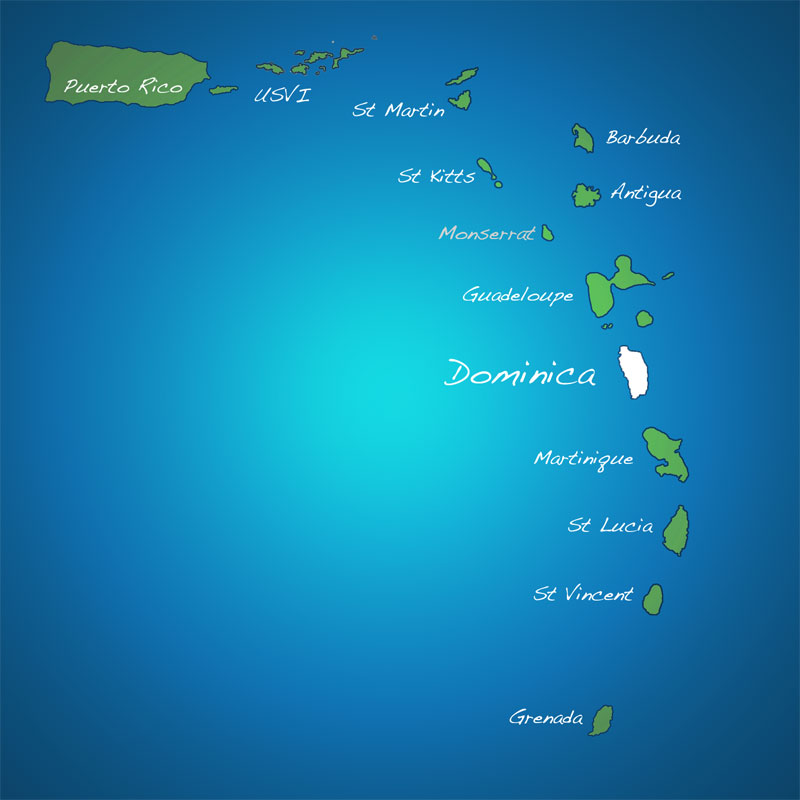
The government of the island of Nevis has declared the closure of the Four Seasons resort, one of the top luxury hotels in the Caribbean, a “national emergency”. The Four Seasons Nevis closed in October 2008 when it sustained severe property damage from Hurricane Omar. This week, the Sovereign Government of the Island Nation of Nevis filed a motion asking the Delaware court to abstain from hearing the Chapter 11 bankruptcy case filed by the hotel’s owner, Hotel Equity Fund V, LLC. The Nevis government argues that the bankruptcy filing could prevent the reopening of the hotel, Nevis’ largest employer. The government believes that the continued closure of the Four Seasons constitutes a national emergency for the tiny Caribbean state. Disasters can be devastating for the working poor; sadly, this is a universal phenomenon. I remember that after the terrorist attacks on the World Trade Center, three downtown hotels closed, leaving their wait staff and housekeeping staff without income. These poor souls may not be covered by unemployment insurance and almost certainly don’t have adequate savings to cushion the shock. I am making inquiries to find out if the Nevis resort carried business interruption insurance or other coverage for salary continuation or if the economic hardship experienced by the staff is the result of the loss of tip income that was not indemnified by insurance. Does anyone happen to know the answer?

Prepared Small Business, from paralyzed to prepared.